Showing posts with label Eye Exams. Show all posts

Tuesday, July 28, 2020

Why children's eye exams are important:
Eye exams for children are very important to insure your child's eyes are healthy and have no vision problems that could interfere with school performance and potentially affect your child's safety.
A child who is unable to see print or view a blackboard can become easily frustrated, leading to poor academic performance.
Schedule an appointment today!

Wednesday, February 26, 2020

WHAT IS KERATOCONUS?
We see through the cornea, which is the clear outer lens or "windshield" of the eye. Normally, the cornea has a dome shape, like a ball. Sometimes, however, the structure of the cornea is just not strong enough to hold this round shape and the cornea bulges outward and downward like a cone. This condition is called keratoconus.
Keratoconus is caused by a decrease in protective antioxidants in the cornea. The cornea cells produce damaging by-products, like exhaust from a car. Normally, antioxidants get rid of them and protect the collagen fibers. If antioxidant levels are low, the collagen weakens and the cornea bulges out. The changes in the shape of the cornea can happen quickly or may occur over several years. The changes can result in blurred vision, glare and halos at night, and the streaking of lights.
Treatment usually starts with new eyeglasses. If eyeglasses don't provide adequate vision, then contact lenses, usually rigid gas permeable or scleral contact lenses, may be recommended. With mild cases, new eyeglasses can usually make vision clear again. Eventually, though, it will probably be necessary to use contact lenses or seek other treatments to strengthen the cornea and improve vision.

Monday, November 18, 2019

National Diabetes Awareness Month


November is National Diabetes Awareness month! Diabetes refers to a complex metabolic disease in which your body either can’t produce insulin, doesn’t produce enough insulin, or simply can’t use it efficiently.

Blurry vision is often one of the first warning signs of diabetes. Your vision may be blurry because fluid is leaking into the lens of your eye. This makes the lens swell and change shape. Those changes make it hard for your eyes to focus, so things start to look fuzzy.  You may also get blurred vision when you start insulin treatment. This is due to shifting fluids, but it generally resolves after a few weeks. For many people, as blood sugar levels stabilize, so does their vision.


Diabetic retinopathy is a term that describes retinal disorders caused by diabetes. Some of these disorders include macular edema and proliferative retinopathy. Left untreated, it may lead to blindess.

Macular edema is when the macula swells due to leaking fluid. The macula is the part of the retina that gives you sharp central vision. Other symptoms of macular edema include wavy vision and color changes.

Proliferative retinopathy is when blood vessels leak into the center of your eye. Blurry vision is one of the signs that this is happening. You may also experience spots or floaters, or have trouble with night vision.
If you have diabetes, you’re at increased risk for a variety of eye problems. It’s important to have regular checkups and eye exams.

Monday, November 11, 2019


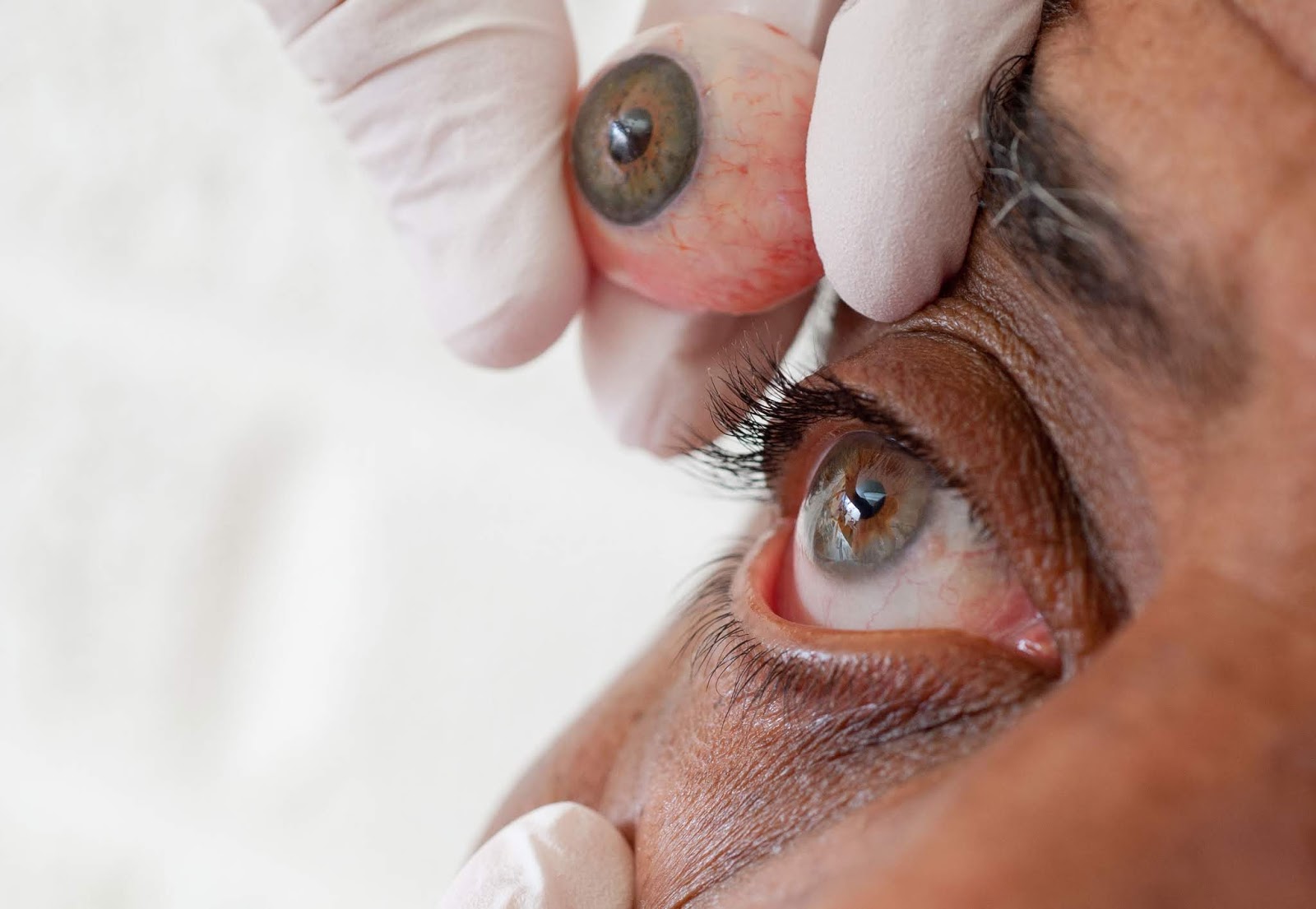
Artificial (Prosthetic) Eyes


These days artificial eyes can go unnoticed - which is just what you want. You may even have met someone else with an artificial eye and not even known it.


A prosthetic eye can help improve the appearance of people who have lost an eye to injury or disease. It's commonly called a "glass eye" or "fake eye." It's not really an eye, but a shell that covers the structures in the eye socket.  For most people it is vastly preferable to wearing an eye patch or bandage.  If the entire eye is removed, an ocular implant and prosthesis prevent the tissues in the eye socket from growing to fill the empty space.


Although the surgery itself is minor, loss of an eye and adjusting to life with a prosthetic eye can be very challenging, psychologically, and emotionally.  Support groups or counselling are available to help people through this difficult time.

Wednesday, October 30, 2019

FSA - Use It Don't Lose It


It’s that time of year again – if you don’t use your benefits you’ll lose them (most don’t roll over).  Call to schedule your exam before your deductible starts over January 1, 2020!  Many patients lose valuable eye care benefits because they’ve let the year slip away.


Sunday, June 26, 2011

Remember to schedule your child's Back to School eye exam


It's that time of year when the activities of summer are keeping you so busy having fun that it's easy to forget the start of a new school year is just around the corner. The majority of all we learn is attributable to the information we are able to process from the images we see. We know that reading is enhanced when our eyes are functioning properly, and many learning difficulties can be attributed to poor vision. A back to school eye exam from our eye doctors can help put your mind at ease that your child is being given the best opportunity to succeed in the classroom. To learn more about children's eye exams and learning please follow this link.

Sunday, May 16, 2010

How often should one have their Eyes Examined?

When was the last time you had your eyes examined? It is a common question and you are likely to be asked it the next time you come into the eye doctor's office. But how often should you have your eyes examined?

The short answer for most individuals is every year. However, if you have diabetes, hypertension, or a family history of eye disease you may need to be followed more closely. A family history of macular degeneration, glaucoma, diabetes, multiple sclerosis, cerebral palsy, cataracts, and other conditions are particularly important to tell your eye physician at the time of your visit.

Childhood eye exams are also important to monitor proper visual development. Some conditions that might place a child more at risk for eye disease include premature birth, family history of retinoblastoma, congenital cataracts, high refractive error, and strabismus.

To see a detailed list of eye exam frequency recommendations from the American Optometric Association please click here.